Tuesday, August 23, 2011

Loss of Two Champions of working class


MAINSTREAM, VOL. XLIX, NO 29, JULY 9, 2011
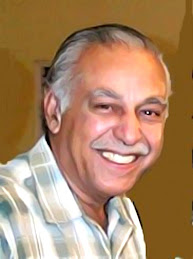
Tribute to Chaturanan Mishra
One of the tallest leaders of the Communist Party in Bihar, Chaturanan Mishra, who was the Union Agriculture Minister in the governments of both H.D. Deve Gowda and I.K. Gujral in 1996-98, passed away at the All India Institute of Medical Sciences, New Delhi around noon on July 2, 2011. A former President of the All-India Trade Union Congress (AITUC), he was ailing for quite sometime but the end came rather suddenly. He was admitted to the AIIMS the previous day and put on a ventilator; however, he could not be revived. He is survived by his wife, four daughters and a son, besides several grandchildren.
His last rites were performed at the Capital’s Nigambodh Ghat before a large crowd of relatives, friends, comrades. The body was kept for sometime at the CPI headquarters, Ajoy Bhavan, before the final journey to the crematorium. Born on April 7, 1925 at Nahar village of Madhubani district, Chaturanan Mishra plunged into the vortex of the freedom struggle in his student days and was imprisoned twice for participating in that struggle. He joined the ‘Quit India’ movement of 1942 and was jailed for that reason; it was then that he sustained serious injuries in Derbhanga jail. Like his colleague and comrade-in-arms, Bhogendra Jha, former MP and the indisputable mass leader of Madhubani, he too came into the communist movement from the Congress.
The CPI was founded in Bihar by such stalwarts as Rahul Sankrityayan, B.B. Mishra, Sunil Mukherjee, Ratan Ray, Shyamal Kumar Jha. In course of time it was enriched by the entry into the party of Yogendra Sharma, Ali Ashraf, Jagannath Sarkar, Indradeep Sinha, Chandrasekhar Singh from the Congress Socialist Party; and Karyanand Sharma, Bhogendra Jha and Chaturanan Mishra from the Congress. With Mishraji’s demise (Jagannath Sarkar breathed his last in April 2011), almost all the Communist leaders of yester-years have departed. (Those from that generation who are still alive include historian Dr R.S. Sharma and CPI-M leader Ganesh Shankar Vidyarthi; even UCPI leader Krishna Chandra Choudhury is no more.)
In 1944 he migrated to south Bihar (now Jharkhand) with the party deputing him for trade union work there. As he narrates in the following interview, “I spent the next twentyfive years in Giridih and Hazaribagh struggling for the cause of mine labourers and highlighting pertinent social issues.” He also says: “It was a great learning experience and my longest journey so far—in socio-cultural terms; it was a sort of metamorphosis for me.” His popularity among the tribals and workers there was manifest in his being elected from the Giridih constituency thrice—in 1969, 1972 and 1979. He also served as the deputy leader and leader of the CPI group in the House and in that capacity became Leader of the Opposition in the Bihar Assembly as well.
He was twice elected to the Rajya Sabha from Bihar—in 1984 and 1990. In 1996 he was elected to the Lok Sabha from Madhubani, which at one time was called ‘little Moscow’ (Bhogendra Jha represented that constituency in the Lok Sabha for several terms). Thereafter he became the Union Agriculture Minister when the CPI, unlike the CPI-M, decided to join the Deve Gowda Government at the Centre (the other CPI Minister in Deve Gowda’s Cabinet was Indrajit Gupta who was entrusted with the Home portfolio).
After S.A. Dange relinquished the top post of the AITUC, Mishraji became the organisation’s President from 1983 to 1989. In that capacity he tried his level best to ensure the AITUC’s merger with the HMS (and in that he was fully supported by Indrajit Gupta, the legendary trade union leader of the country) but that was not to be due to ‘internal hindrances’ as he mentions in the interview. (Those hindrances came mainly from the pro-CPI-M section within the AITUC leadership for fear of the negative reaction from the CPI-M’s trade union wing, the CITU, which is rooted in sectarianism.) In contrast Mishraji was far more open and while pleading for Left and communist unity never took a sectarian position; like erstwhile CPI General Secretary Indrajit Gupta, he always kept the broad national picture in view. That is why he had no hesitation in acknowledging, as he does in the following interview, that “today civil rights activists like Medha Patkar, Arundhati Roy etc. are raising their voice on issues that should be our concern”. He thought out of the box and wrote freely bringing into focus the national problems which, he was convinced, should be tackled by evolving a national perspective and outlook.
In 1996-98, the Communists in the Union Government played an outstanding role that is seldom recognised. While Indrajit Gupta emerged as the “best Home Minister this country has ever had”, an observation made by former PM I.K. Gujral, Mishraji as the Union Agriculture Minister pioneered such schemes as crop insurance, Kisan Credit Card and set up institutions like the Krishi Vigyan Kendra “to lift the status of agriculture”, as he describes in the following interview. But while doing so he was never oblivious of the necessity of people’s struggles to implement the schemes and projects meant for the toiling populace. Apart from being a tireless political worker, he was endowed with a clear vision of the future. He wrote extensively not just in party journals but in this weekly too. In fact he was a prolific writer and several of his articles appeared in Mainstream influencing the large band of its readers including such a personality as Justice Sukumaran who openly wrote from Thiruvananthapuram about this, warmly complimenting Mishraji that was duly conveyed to him.
Like Jagannath Sarkar, Yogendra Sharma, Indradeep Sinha, Bhogendra Jha, he had forged close relations with N.C., and had intimate ties with the Mainstream family. While offering our sincere homage to his abiding memory we are reproducing in the following pages the interview taken by Atul Kumar Thakur (that appeared in this journal last February) and two of his articles (which were published in Mainstream in 2010). S.C.

Monday, August 1, 2011

WFTU GS Com Mavrikos

Working Class Is Awakening the World Over

Rajiv Dimri interviewed George Mavrikos, General Secretary of the World Federation of Trade Unions – WFTU, at the ILC.

Greece is witnessing a major upsurge at the present time. Can you tell us more about these movements of the Greek working class?
The Greek bourgeoisie, the social democrat government, and its allies the conservative party in cooperation with the EU, the IMF and the World Bank have unleashed an assault on the Greek working class on the pretext of the global capitalist crisis. A range of anti-labour laws are being introduced to curtail workers’ rights - regarding working hours, salaries, social security, pensions, and tax policy.
The Greek working class has been thwarting these moves. Last year, Panergatiko Agonistiko Metopo (PAME) – the All Workers’ Militant Front - organized more than 13 massive general strikes successfully. This year it continues to mobilize the working people and unite them with other progressive forces in a popular front against the anti-labour measures. The main slogan is: “We refuse to pay for their crisis, deficits and debts - those who created the crises should pay!” It is the plutocracy and its parties, PASOK (social democrats) and N.D. (conservatives) who are pushing for the anti-people measures.
The 16th World Trade Union Congress held at Athens in April this year turned into an international forum of solidarity with the Greek people.
What are the trends you see in the international working class movement today?
After WWII, a balance was created between the two sides, leading to a relatively favourable situation for the working people and their struggles. Today the current balance of forces is against the people and the workers.
But this year, we have nevertheless experienced great struggles in response to the global economic crisis. The world over, the ruling class is trying to force people to bear the burden of its crisis – and this has sparked off serious resistance in Greece, Portugal, Spain, France, Italy, many countries of Asia, Africa and Latin America, as well as in Mexico, and by immigrant workers in the US. Recently in Madison, Wisconsin, in the US, there was a significant battle by public employees fighting to defend their right to collective negotiations and their salaries.
What can we conclude from these developments? It is clear that major opportunities of empowerment and awakening for the working and the popular masses have been created. Class struggle is intensifying. The examples in Tunisia, Algeria, Egypt, Bahrain, Libya, Yemen, Iran, Jordan, Pakistan etc. confirm this. The revolt of the people of Egypt, regardless of its future outcome, shows that people are the real protagonists of history.
These positive developments coexist with equally serious challenges. One serious challenge is the lack of unity and coordination between the leaderships of many trade unions at national level.
To exploit the new possibilities which are opening up, and for the movement to pass to another level of struggles, we need to critically assess all these developments and to devise effective tactics to eliminate the barriers in every country. We must learn from struggles of the past.
What is WFTU’s approach to the developments in the Arab world?
Workers and people of the Arab world are rising up against dictatorships which suppressed the people and stole their wealth. Poverty, unemployment, discrimination, lack of freedom is what these regimes brought to the working people. These regimes were also subject to imperialist powers led by the USA, which is pursuing its project of a “New Middle East”, aiming to divide the Arab people into conflicting states. Their main aim is to control petroleum and the natural resources of this region.
The multiple uprisings proved that the working class and the popular can shape their future. WFTU has always supported the unity of the Arab world. It has always supported the struggle of the Palestinians for a free and independent state with Jerusalem as its capital, as well as Syria and Lebanon. It has always stood for the liberation of the occupied lands against Israeli occupation. We are against every imperialist intervention and invasion in Libya and Syria.
What is WFTU’s plan of action in the days to come?
WFTU held the historic 16th World Trade Union Congress at Athens in April. This was an open, democratic, internationalist and militant Congress with the participation of 828 delegates from 101 countries and 115 speakers.
The next big step will be the WFTU International Action Day on October 3, which coincides with the founding day of the WFTU on October 3, 1945. The key objectives of this Action are:
- 35 hours of work: i.e 7 hours per day and a 5-day working week, and better wages
- Public social security for all
- Collective bargaining, collective agreements
- Trade union and democratic freedoms
- Solidarity with the Palestinian people
The International Day of Action will mark the start of new protests against privatization and layoffs. It will mark the engagement of all social strata against the policies of the monopolies and multinationals.
What are WFTU’s proposals for democratizing the ILO?
The WFTU had been repeatedly demanding a change in the system of the elections for the Governing body of the ILO, in order to provide proportionate representation to all international organizations such as WFTU, ICATU, OATUU, ACFTU. WFTU demands that the monopoly of the International Labour Organisation by one organisation (ITUC) should stop, and all international trade union organisations be treated fairly, equitably and without any discrimination. The prevailing discrimination goes against the prestige of ILO and the credibility of its decisions.

Wednesday, July 6, 2011

Friday, April 8, 2011

CPM CC On VRS

Review of the Work on the Trade Union Front
And Immediate Tasks
(Adopted by the CPIM Central Committee at its meeting -- November 22-24, 2002)


15. VRS Scheme -- A New Device of Retrenchment

With an avowed objective to reduce the workforce in various enterprises, Voluntary Retirement Schemes are being introduced in several industries in the public and the private sector. It is a part and parcel of the cost cutting exercise by industrial undertakings in the name of competitive environment under liberalisation. At times the managements offer “liberal” packages, which ultimately result in savings in their operating costs. It has been observed that some of our leading activists have also fallen prey to such schemes, which creates frustration among the employees.

Trade unions should oppose VRS plans which are purely retrenchment schemes. However, despite the stand and campaign of the unions, if individual employees avail of the scheme, they cannot be prevented by the unions. Whenever managements resort to coercive methods to get employees to accept VRS, then the union will have to take steps against such methods.